Custom Software Development Cost: What Drives the Price
Custom software cost depends on scope: data model, user roles, migration, automation rules and integrations. See what moves the price and how to compare quotes.
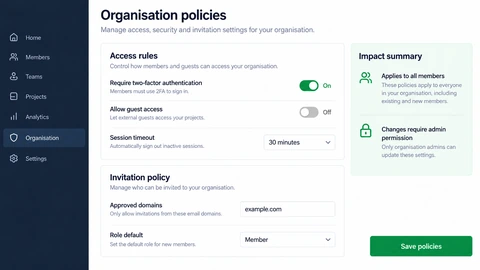
Custom software cost depends on scope rather than a fixed rate. The main drivers are the data model, the number of user roles, migration work, automation rules, external connections and how much review the work needs. A reliable price follows a scoped workflow, which is why a project starts with discovery.
This guide explains each driver in plain terms and how to ask for a quote you can compare. It gives no price figures: Cubusify agrees milestones and commercial terms before development begins, and a number quoted before that scope exists would be a guess.
What drives the cost of custom software?
Six things move the price more than any others. Each is a question you can answer before you speak to a supplier.
1. The data model
How many kinds of record exist, how they relate and which fields must be exact. A customer list with a few fields is a different job from a model with accounts, contracts, permissions and history.
2. User roles and permissions
Every role, such as administrator, manager, customer or partner, needs its own screens, rules and tests. A rule like “a sales user cannot open another team’s account” has to be built and checked, not assumed.
3. Migration from existing tools
Moving spreadsheets or an older system means mapping columns, resolving duplicates and reconciling the result. Poor source data adds work before any new feature does.
4. Automation rules
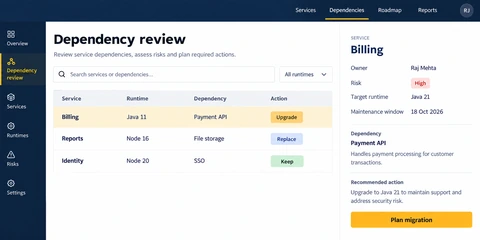
Routing, reminders, approvals and notifications each need explicit rules, exception handling and a way to recover when something fails.
5. External connections
Payments, email, accounting, identity and other systems each need an integration that someone designs, tests and maintains. Systems with weak or undocumented interfaces cost more to connect.
6. Review, testing and release
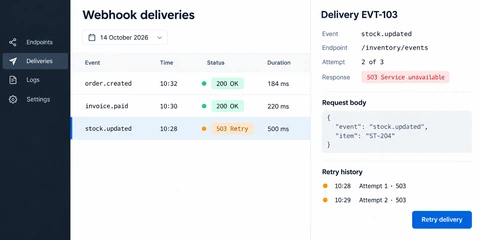
Acceptance checks, security review and a controlled release take time. Skipping them lowers the first price and raises the cost of problems later.
What does software cost to run after launch?
The build is not the whole cost. Hosting, third-party licences, monitoring, fixes and the changes your business will ask for all continue after release. Compare the full operating cost rather than only the build, as you would when weighing a Shopify, WooCommerce or custom store (see how to choose an ecommerce platform).
Should you build, buy or configure?
Start with the simplest option that could work. A custom build is worth exploring when an essential journey does not fit standard platform capabilities, when permissions or integrations cannot be met, or when the software is part of what you sell.
- Configure when an existing product covers most of the workflow and you can accept its limits.
- Buy and connect when two or three products together cover the need and the cost sits in the integration.
- Build when the workflow is specific to you, or standard tools push important work into spreadsheets.
How do you get quotes you can compare?
Quotes are comparable only when they price the same scope. Prepare these before you ask:
- One complete workflow, from the first input to the final output, written as steps.
- A sample record with real field names (hide private data).
- The systems it must connect to, with what each must send or receive.
- The roles that will use it and what each may see or change.
- How you will judge it finished: the checks you would accept.
Ask each supplier what is and is not included, how changes to scope are handled and what you receive at handover.
What should a scoped discovery produce?
A discovery step turns a loose brief into something that can be priced. It should produce a workflow map, a first-release scope, the data and integration questions that remain open, agreed milestones and acceptance checks. With those in hand, a price describes a defined piece of work.
What to do next
If you are budgeting a build, write down the one workflow that matters most and answer the six drivers above. Then compare custom software development with a focused first release through MVP development. If you are weighing an outside team, read about software development outsourcing and how to choose a software development company.
To discuss your own scope, contact Cubusify.
See the workflow in our project work
Explore the screens and decisions behind related user journeys. Each case study explains its project context; the service choice for your own project follows your requirements.
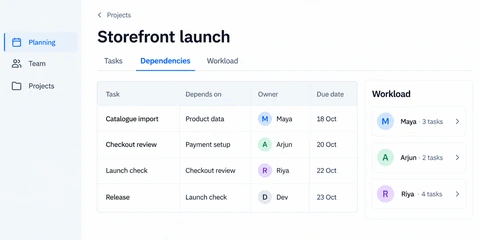
Project Planning Dashboard: Orbit
Task dependency relationships · Owner and deadline columns · Team workload summary.
Read the project case study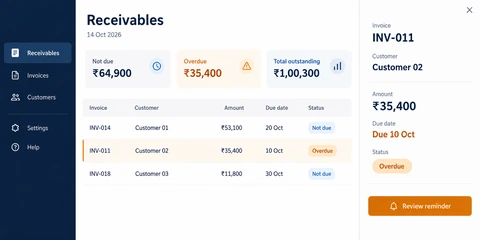
Invoice Management Software: Ledger
Outstanding and overdue summaries · Invoice list with date and status · Selected invoice detail and reminder review.
Read the project case studyExplore custom software development to scope a first release.