Enterprise reference architecture
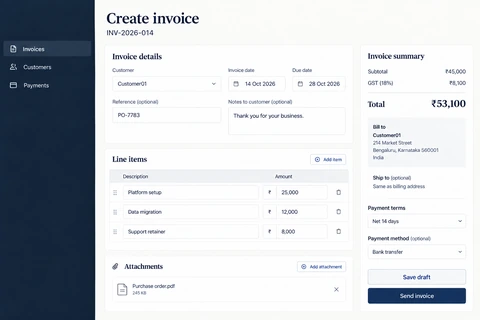
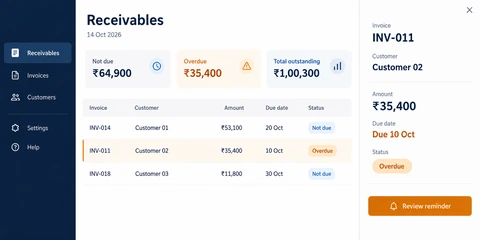
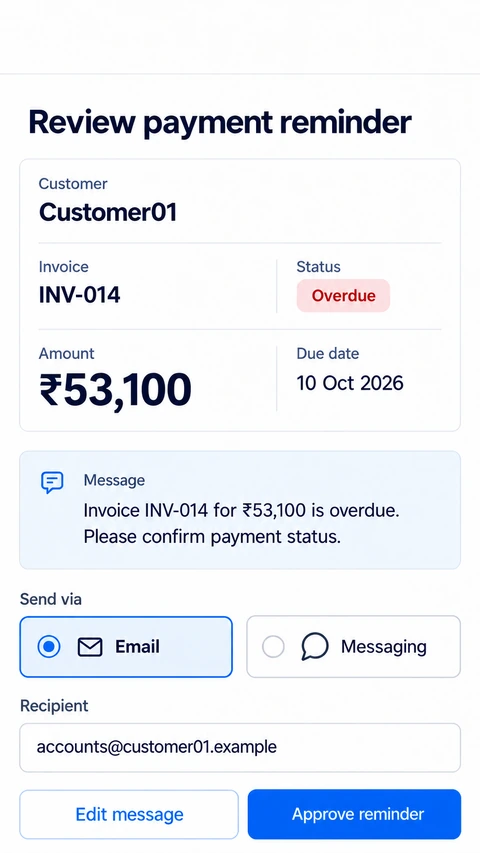
A proposed engineering design for this workflow. The enterprise scenario and stack below are illustrative architecture choices; they are separate from the confirmed project screens.
The enterprise scenario
A finance-operations team reviews receivables across business units, currencies and accounting providers, with controlled invoice corrections and reminder approval.
Architecture objective: Make every displayed amount traceable to a defined source and keep financial corrections auditable without presenting a dashboard as a substitute for the accounting authority.
Proposed technology stack and rationale
Operations interface
Angular and TypeScript
Use explicit invoice states, scoped queries and review screens for authorised finance roles.
Financial workflow services
Java, Spring Boot and typed integration contracts
Model invoice lifecycle, approvals and corrections as domain operations rather than unrestricted record updates.
Financial records
PostgreSQL exact-decimal fields and append-only adjustments
Store currency alongside amount and preserve the origin and reason for posted corrections.
External integration
Kafka or a managed queue with a transactional outbox
Publish changes durably and deduplicate consumer effects; broker guarantees do not automatically cover external accounting writes.
Documents and audit
Versioned object storage, managed keys and Grafana dashboards
Separate document access from public URLs and retain a queryable record of significant finance actions.
Technical challenges and design approach
1Conflicting financial sources
An accounting export and a later callback may disagree. Define source precedence and reconciliation instead of accepting whichever update arrives last.
Amounts without context
Combining currencies or inconsistent date windows produces misleading totals. Make the unit, currency and calculation scope part of each reported measure.
Repeated financial actions
A retry must not create another reminder or adjustment. Bind the command to an idempotency reference and reconcile uncertain provider outcomes.
How the proposed workflow fits together
- A provider adapter validates source records and records their external identifiers.
- The import reconciles amounts, currencies and lifecycle state before updating the read model.
- A reviewer selects an invoice and sees the source-linked detail behind the total.
- Approved changes produce append-only adjustment or communication events.
- Workers apply external effects with deduplication and an operations queue for mismatches.
Acceptance and failure-path checks
- Totals reconcile with the defined source and currency scope.
- Corrections retain the original record and the authorised adjustment reason.
- A repeated import or approval does not repeat a financial side effect.
- Audit exports include actor, time, affected record and the relevant correlation reference.
The tradeoff
Use event streaming when independent consumers and replay have a clear purpose. A smaller finance integration can use a managed queue and reconciliation jobs with fewer operating responsibilities.
Architecture references: Spring Boot documentation, Kafka delivery semantics and AWS reliability guidance. These describe engineering patterns, rather than certify this project’s implementation.