
MVP Development
for Startups
Build one complete product journey that tests a specific customer assumption, with scope and success criteria agreed before development.
Discuss your project
MVP development scope
An MVP should answer a question: will a defined user complete, return to or pay for this workflow? If a manual service or clickable prototype can answer it, use that evidence before paying for a larger application.
Discovery and scope
Write the customer, problem, riskiest assumption and essential journey in a short brief with explicit exclusions.
Working first release
Build the minimum functional experience, including the access controls and recovery the task requires.
Learning and handover
Plan useful events, user feedback and a review that decides whether to continue, change direction or stop.
Planning MVP development
- 1
Choose the assumption to test
Bring interview notes, sketches or the existing workaround. Identify what would invalidate the idea and the smallest credible test.
- 2
Deliver in working milestones
Review one complete flow at each milestone. Keep secondary features in a separate backlog rather than stretching the launch scope.
- 3
Evaluate with real users
Compare observed behaviour with the agreed threshold. Record the next decision and the technical work needed if the pilot expands.
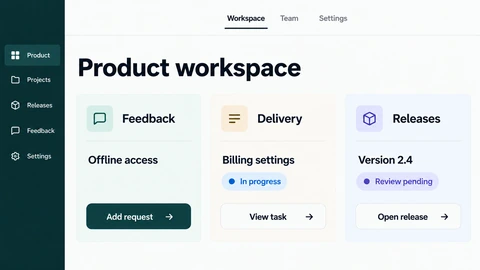
See the details.
Across every screen.
Explore the interface, then open any image at its original resolution.
Desktop experience
1 / 1MVP development
Scope, tradeoffs and preparation for your project.
How long will an MVP take?
The answer depends on the journey, integrations and review needs. A schedule follows a scoped discovery discussion; a fixed week count without those details would be unreliable.
Can AI help us build the MVP?
It can assist drafting, prototyping and development. Real user validation, access controls and testing still need deliberate human decisions.
What is not optional in a minimum product?
Required security, data handling and the ability to complete the core task. Reduce feature breadth rather than removing controls the use case needs.
How we would validate this scope
Agree the important success and failure paths before development. These proposed checks help turn the service description into a reviewable delivery brief.
- The first user can complete the selected journey without access to unfinished secondary features.
- The riskiest assumption has an agreed observation and decision threshold before the pilot begins.
- Required permissions and data safeguards remain in scope despite reduced feature breadth.
- The review distinguishes user evidence from assumptions and proposed follow-on work.
Discuss your MVP development project.
Share your requirements so we can agree a focused scope, dependencies and the next useful step.