
Flutter & React
Native Development
Explore a shared-code mobile application when the same customer journey needs to work on iOS and Android with a manageable release process.
Discuss your project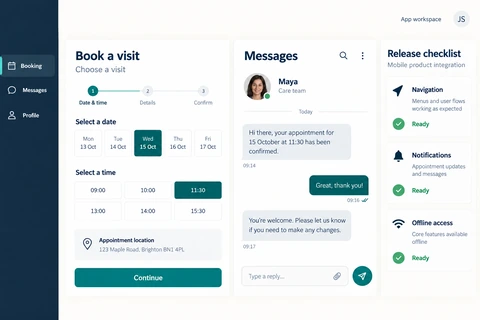
Flutter & React Native scope
Cross-platform development can share substantial application logic, but platform testing and some native work remain necessary. Compare Flutter and React Native against your existing skills, required libraries and device interactions.
Framework assessment
Evaluate UI requirements, package support and existing code against a representative part of the application.
Shared application logic
Design navigation, data access and state handling so shared features stay consistent across platforms.
Platform-specific work
Allow for native modules, permissions, builds and testing where iOS and Android behave differently.
Planning Flutter & React Native
- 1
Check dependencies before committing
Identify payments, maps, authentication and device SDKs, then verify that the chosen approach can support them.
- 2
Build a representative feature
Exercise navigation, network failures and a required native interaction on both target platforms.
- 3
Establish repeatable releases
Document signing, build configuration, dependency updates and platform regression checks.
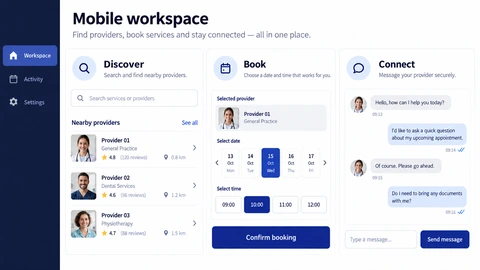
See the details.
Across every screen.
Explore the interface, then open any image at its original resolution.
Mobile experience
1 / 1Flutter & React Native
Scope, tradeoffs and preparation for your project.
Does one codebase remove all native development?
No. Device SDKs, OS-specific behaviours and build configuration may still require platform expertise.
Can you continue an existing Flutter or React Native app?
An initial review checks dependency health, architecture, automated coverage and the effort needed to produce a working release.
How should we choose between the frameworks?
Use the required integrations, interaction design, team experience and long-term maintenance needs rather than a generic popularity ranking.
How we would validate this scope
Agree the important success and failure paths before development. These proposed checks help turn the service description into a reviewable delivery brief.
- The critical native dependency works on both target platforms in a release build.
- Platform-specific navigation, keyboard and permission behaviour is checked independently.
- Shared business rules produce equivalent results across iOS and Android.
- Dependency and signing updates are documented as part of the maintenance handover.
See the workflow in our project work
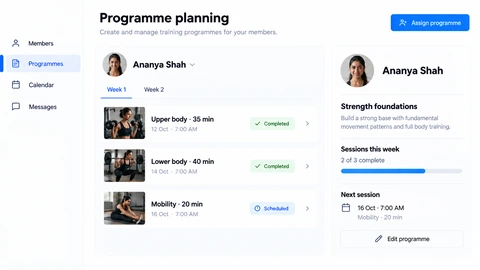
Explore the screens and decisions behind related user journeys. Each case study explains its project context; the service choice for your own project follows your requirements.
Discuss your Flutter & React Native project.
Share your requirements so we can agree a focused scope, dependencies and the next useful step.