
Software Product
Modernisation
Improve an existing application’s usability, maintainability or infrastructure while preserving the business workflows people depend on.
Discuss your project
Product modernisation scope
Modernisation is a risk-management decision as much as an engineering project. Start with the cost of the current limitations and the parts that already work; replacing everything at once can add migration risk without solving the most expensive problem.
Application assessment
Review dependencies, data flows, deployment and the workflows most exposed to defects or unsupported components.
Incremental replacement
Define boundaries for upgrading a module, interface or service without forcing every customer to move at once.
Migration and continuity
Scope data mapping, compatibility checks, rollback points and communication for affected users.
Planning product modernisation
- 1
Document the existing behaviour
Capture important rules, scheduled tasks and integrations before changing implementation. Use current records as reconciliation examples.
- 2
Modernise a bounded area
Select a slice with a clear benefit and test old and new behaviour side by side where practical.
- 3
Retire old dependencies deliberately
Confirm adoption, migrated records and operational ownership before removing the previous path.
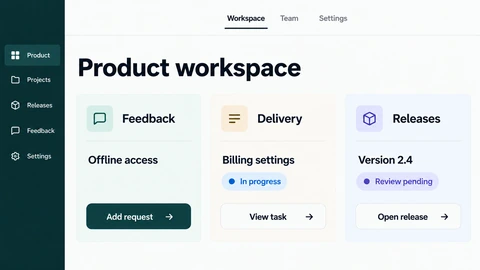
See the details.
Across every screen.
Explore the interface, then open any image at its original resolution.
Desktop experience
1 / 1Product modernisation
Scope, tradeoffs and preparation for your project.
How do we choose between refactoring and rebuilding?
Compare the change required, existing test coverage, data migration and business continuity. A new codebase is not automatically the lower-risk option.
Can the product stay available during the work?
Continuity requirements influence the rollout. Some changes can run alongside the old path; others need an agreed maintenance window.
What do you need to assess the product?
Repository and environment access, architecture notes, known incidents, dependency information and examples of critical user tasks.
How we would validate this scope
Agree the important success and failure paths before development. These proposed checks help turn the service description into a reviewable delivery brief.
- Representative old and new workflows produce reconciled records and business outcomes.
- A migrated module preserves required external contracts or provides an explicit transition.
- The cutover plan names the conditions for stopping, reverting or applying a forward fix.
- Retired dependencies are removed only after the replacement path has been validated.
Discuss your product modernisation project.
Share your requirements so we can agree a focused scope, dependencies and the next useful step.