
Website Conversion
Optimisation
Investigate where relevant visitors struggle to enquire, book or buy, then test focused improvements to the customer journey.
Discuss your project
Conversion optimisation scope
Conversion work needs a defined outcome and trustworthy measurement. First distinguish a confusing interface from poor traffic fit, a weak offer or a broken form; each calls for a different response.
Journey and measurement review
Check key events, form behaviour and the path from landing page to completed action.
Friction investigation
Use available analytics, support questions and observed tasks to identify unclear information or unnecessary steps.
Experiment and release plan
Define a hypothesis, primary measure and rollout decision before changing the experience.
Planning conversion optimisation
- 1
Verify the baseline
Confirm that completions and failures are recorded correctly and separate relevant audience segments where practical.
- 2
Prioritise a specific obstacle
Choose a change supported by evidence, such as clearer requirements, better error guidance or a shorter booking path.
- 3
Evaluate the outcome
Use an appropriate experiment or a clearly qualified before-and-after comparison, accounting for traffic and campaign changes.
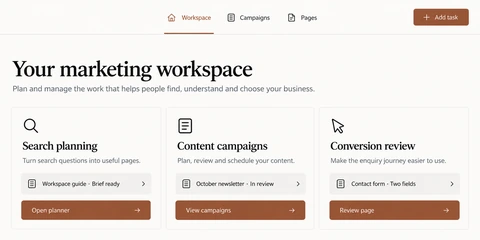
See the details.
Across every screen.
Explore the interface, then open any image at its original resolution.
Desktop experience
1 / 1Conversion optimisation
Scope, tradeoffs and preparation for your project.
Do we need enough traffic for an A/B test?
Yes, the detectable effect and traffic volume determine whether a test can answer the question. Lower-traffic sites may benefit first from usability research and obvious defect fixes.
Does a higher conversion rate always mean better leads?
No. Track lead quality and business outcomes alongside form completion so the design does not simply attract irrelevant submissions.
Can you promise a percentage uplift?
No. A proposed change is a hypothesis until evaluated with suitable evidence.
How we would validate this scope
Agree the important success and failure paths before development. These proposed checks help turn the service description into a reviewable delivery brief.
- The primary completion event is verified before comparing conversion figures.
- The hypothesis identifies a specific obstacle and an observable change in behaviour.
- A proposed test has sufficient traffic and a defensible decision rule.
- Lead relevance is reviewed alongside the number of completed submissions.
See the workflow in our project work
Explore the screens and decisions behind related user journeys. Each case study explains its project context; the service choice for your own project follows your requirements.
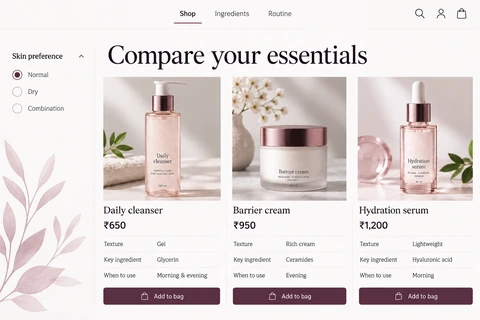
Skincare Ecommerce: Dew
Skin-preference filtering · Ingredient, texture and use-time comparison · Product-level add-to-bag actions.
Read the project case study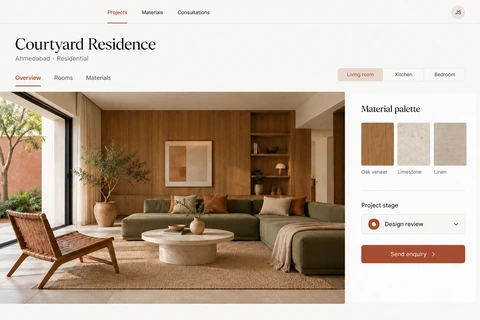
Interior Design Website: Forma
Project and room navigation · Material palettes beside photography · Project-stage context and consultation enquiries.
Read the project case studyDiscuss your conversion optimisation project.
Share your requirements so we can agree a focused scope, dependencies and the next useful step.