
Software Maintenance
& Monitoring
Keep visibility into application health, dependency changes and recurring faults with an agreed maintenance scope and response process.
Discuss your project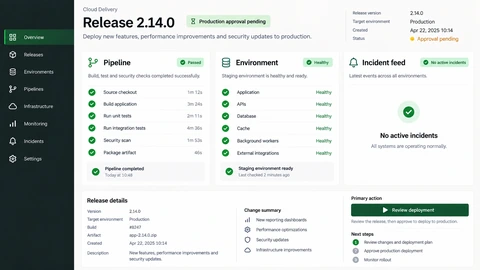
Maintenance & monitoring scope
Maintenance needs clear boundaries: what is monitored, who receives alerts and which work is covered. Monitoring creates value when a signal leads to an understood action instead of a growing inbox of noise.
Health and error visibility
Choose uptime checks, application errors and operational signals that match the critical user journeys.
Updates and change review
Plan dependency updates, environment changes and regression checks using a staging workflow.
Incident and support ownership
Document escalation contacts, access arrangements and the difference between a defect, an operational incident and a new feature.
Planning maintenance & monitoring
- 1
Establish a service inventory
List applications, providers, owners and renewal or update dependencies. Review known incidents and current monitoring gaps.
- 2
Define useful alerts
Set actionable thresholds and verify who receives each alert. Add concise diagnosis and recovery notes.
- 3
Review maintenance regularly
Summarise incidents, completed updates and unresolved risks so future improvements have an explicit priority.
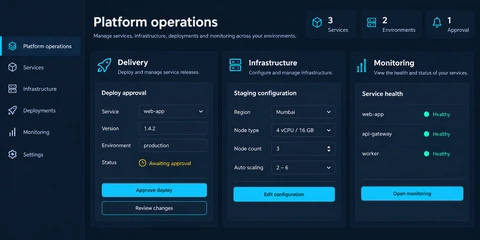
See the details.
Across every screen.
Explore the interface, then open any image at its original resolution.
Desktop experience
1 / 1Maintenance & monitoring
Scope, tradeoffs and preparation for your project.
Is round-the-clock support included?
Coverage hours, response targets and escalation arrangements are contractual choices. They must be agreed rather than assumed.
Can you maintain software you did not build?
A handover review checks repository access, deployment, dependencies and known issues before agreeing ongoing responsibility.
Does maintenance include new features?
Only where included in the engagement. Separate routine upkeep and incident work from product development to keep expectations clear.
How we would validate this scope
Agree the important success and failure paths before development. These proposed checks help turn the service description into a reviewable delivery brief.
- Each alert has an accountable destination and a useful first diagnostic action.
- A synthetic failure demonstrates that the chosen alert path actually works.
- Dependency updates are tested against representative customer journeys.
- Coverage hours, escalation and the distinction between incidents and features are documented.
Discuss your maintenance & monitoring project.
Share your requirements so we can agree a focused scope, dependencies and the next useful step.